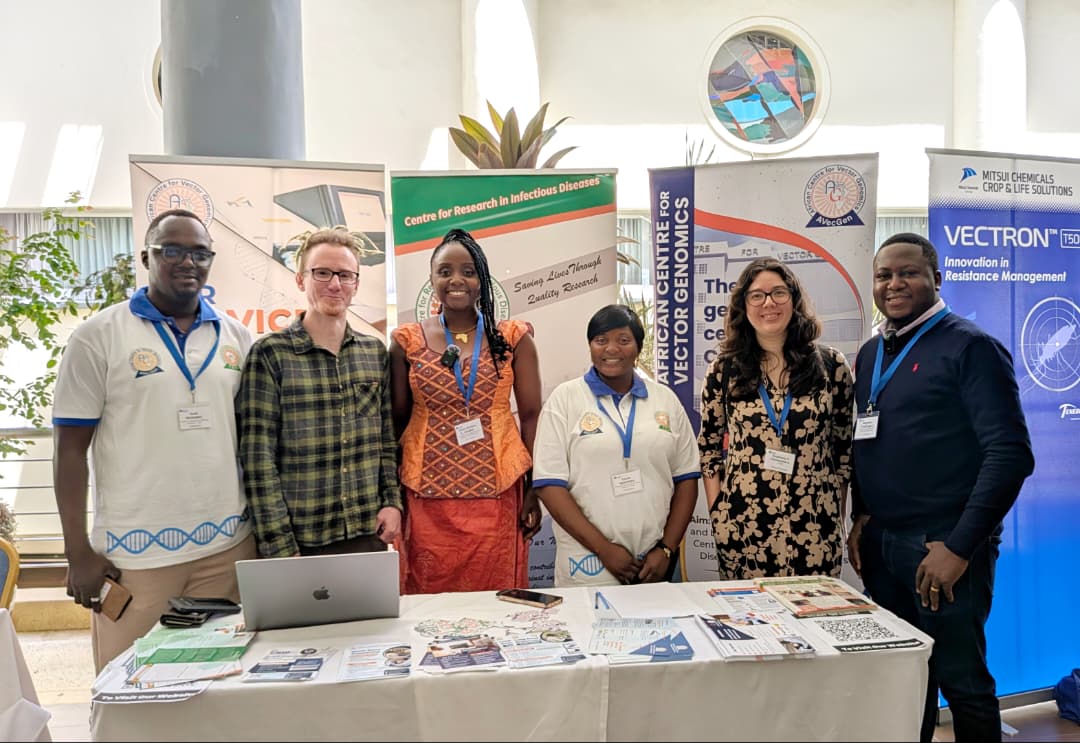
From June 7–13, 2026, the prestigious "Science of Defeating Malaria" Leadership Course convened in Nigeria, gathering global experts. The Centre for Research in Infectious Diseases (CRID) was represented by its leadership, including Executive Director Prof.

Main image Image Credit
From June 7–13, 2026, the prestigious "Science of Defeating Malaria" Leadership Course convened in Nigeria, gathering global experts. The Centre for Research in Infectious Diseases (CRID) was represented by its leadership, including Executive Director Prof. Charles Wondji as Faculty in Residence, Prof. Cyrille Ndo as a course participant, and Dr. Magellan Tchouakui as Alumni in Residence. Prof. Wondji delivered a key lecture addressing the historical success of vector control since 2000 alongside recent progress stagnation, and later moderated a high-level panel exploring the implementation and community engagement strategies required for genetically modified mosquitoes.
The summit shifted its focus to actionable data on Day 5, where Prof. Wondji and Prof. Daouda led a critical session on leveraging genomics for malaria elimination. This science involves analyzing the DNA of malaria parasites and mosquitoes to catch early warning signs missed by standard field observation, such as rising insecticide resistance, emerging artemisinin treatment failures in East Africa, and determining whether infections are locally transmitted or imported.
Rather than being a distant technology, field-ready genomic tools are actively turning DNA sequences into real-time decision maps across Africa today. Transformative case studies highlighted how Cameroon's AVecGen project is actively mapping vector dynamics, while Ethiopia's EMAGEN platform successfully used genetic data to spot faulty rapid diagnostic tests and track invasive Anopheles stephensi mosquitoes. Alongside expansion efforts in Nigeria and Senegal, Rwanda also demonstrated its newly launched platform that connects community health workers directly to laboratory data, proving that genomics is no longer tomorrow’s science, but a life-saving reality today.
Ultimately, CRID's prominent participation in this global summit underscores its vital role in African public health, proudly showcasing the AVecGen project as a pioneering model for how local genomic innovation can directly drive continent-wide malaria elimination.